

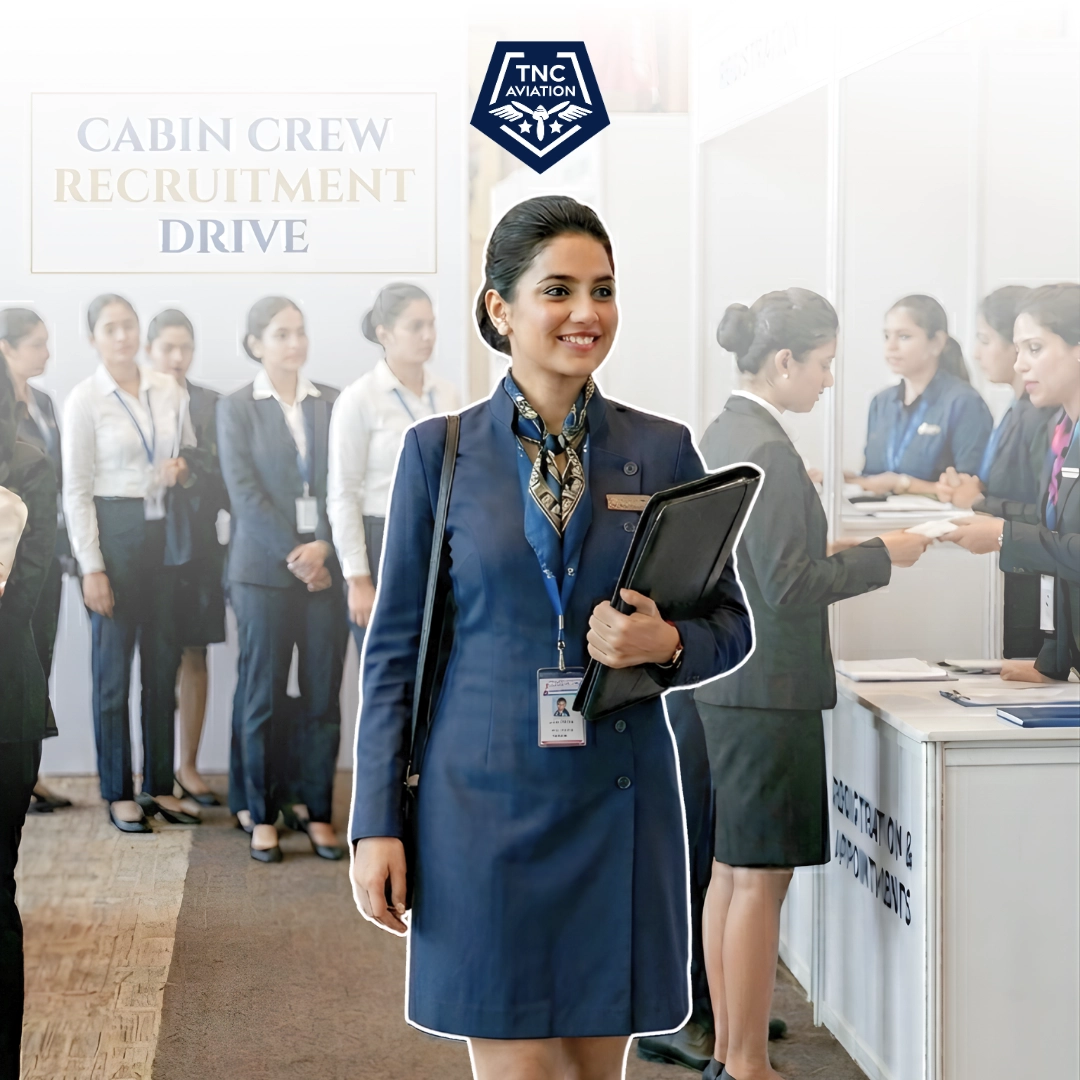
How Cabin Crew Recruitment Works in India - Step-by-Step Process
Cabin crew recruitment in India is a structured process where airlines evaluate candidates on communication, personality, grooming, and ability to handle real situations.
Many candidates apply without understanding how the process actually works. This often leads to confusion, poor preparation, and missed opportunities.
To improve your chances of selection, it is important to understand each stage clearly.
Step 1: Meeting Eligibility Criteria
Before applying, candidates must meet basic requirements.
The following is a non-exhaustive list of typical criteria; however, these may vary from one airline to another:
- 10+2 from a recognised board
- Age between 18-27 years
- Minimum height and proportionate BMI
- Fluency in English and Hindi
- Well-groomed appearance
- No visible tattoos and scars
What recruiters look for:
- Overall personality
- Basic communication skills
- Professional presentation
Step 2: Application Through Official Channels
Candidates are required to apply through airline career portals or attend walk-in interviews.
Best practices:
- Apply only when you meet eligibility criteria
- Keep your resume updated and professional
- Keep a full-size photograph, a passport-size photograph and your Aadhar card ready
- Regularly check airline career pages
What recruiters observe:
- Seriousness towards the role
- Basic profile presentation skills
Step 3: Initial Screening Round
This is usually the first level of evaluation which may happen online or offline
Includes:
- Introduction round
- Basic communication check
- Grooming assessment
What recruiters look for:
- Confidence while speaking
- Clarity in communication
- Overall presence
Candidates who perform well move to the next stage.
Step 4: Group Discussion / Interaction Round
Some airlines conduct group-based evaluations.
Purpose:
- Assess communication in a group setting
- Evaluate listening and interaction skills
What recruiters look for:
- Ability to express ideas clearly
- Respect for others’ opinions
- Team-oriented behaviour
Step 5: Personal Interview
This is one of the most critical stages.
Focus areas:
- Personality and attitude
- Situational responses
- Understanding of the cabin crew role
What recruiters look for:
- Ability to provide real-life examples
- Calm and logical thinking
- Professional communication with strong presence of mind
Step 6: Letter of Intent (LOI)
Candidates who clear interview rounds may either receive a Letter of Intent (LOI) from some airlines, or proceed directly to final selection without an LOI.
What LOI means:
- Conditional selection
- Final hiring depends on further requirements
At this stage, many candidates assume they are fully selected, which is not always the case.
Step 7: PHT (Pre-Hire Training)
After receiving the LOI, some airlines in India require candidates to undergo PHT (Pre-Hire Training).
What is PHT (Pre-Hire Training)?
It is a structured training phase designed to prepare candidates for actual airline operations before final onboarding.
What PHT (Pre-Hire Training) includes:
- Customer service and passenger handling skills
- Grooming and professional presentation
- Body language and confidence building
- Voice modulation and articulation practice
- Real interview and scenario-based preparation
Why PHT (Pre-Hire Training) is important:
- Enhances overall personality
- Professional grooming standards
- Prepares candidates for real airline work environment
- Reduces interview anxiety through practice
- Improves confidence and presence of mind
- Increases chances of final selection/onboarding
Key point:
Through rigorous PHT (Pre-Hire Training), candidates can significantly improve their chances of converting their LOI into final selection as communication and confidence-building are key areas at this stage
Step 8: Final Evaluation and Medical Check
After completing PHT (Pre-Hire Training), candidates undergo final assessments.
This includes:
- Medical fitness reports for the tests conducted during the training (The outcome may vary depending on DGCA guidelines)
- Final documentation
- Internal evaluation
Outcome:
Candidates who meet all requirements receive final confirmation and proceed to onboarding.
Common Mistakes Candidates Make
- Assuming LOI means final selection
- Skipping structured preparation after LOI
- Not taking PHT (Pre-Hire Training) seriously
- Lack of consistency in grooming and communication
Recruiters evaluate candidates continuously until final onboarding.
Conclusion
Cabin crew recruitment in India is not a single-step process. It involves multiple stages, each designed to assess your readiness for the role.
Understanding the importance of PHT (Pre-Hire Training) is critical. It plays a key role in helping candidates transition from initial selection (LOI) to final hiring.
Candidates who stay consistent, prepare seriously, and focus on real skill development are more likely to succeed.
Why Choose TNC Aviation for PHT training.
If you want to prepare effectively for cabin crew recruitment and successfully convert your LOI into final selection, TNC Aviation provides:
- Structured PHT (Pre-Hire Training) aligned with airline expectations
- Personality development and grooming sessions
- Real interview and scenario-based preparation
- Guidance from experienced aviation professionals
At TNC Aviation, you are trained to perform consistently at every stage of the recruitment process and move confidently from LOI to final selection.
