

How to Improve Your Communication Skills for Cabin Crew
Communication is one of the most critical skills for a cabin crew professional. From delivering safety instructions to handling passengers in high-pressure situations, the way you communicate directly impacts both safety and customer experience.
Airlines do not just look for fluent English-they evaluate how clearly, confidently, and professionally you express yourself in real situations.
If you are preparing for a cabin crew career, here’s how you can improve your communication skills effectively.
1. Focus on Clarity, Not Just Fluency
Many candidates believe speaking fast or using complex words is impressive. In reality, recruiters value clarity and simplicity.
What recruiters look for:
- Clear and understandable speech
- Proper sentence structure
- Ability to explain things simply
How to improve:
- Speak slowly and consciously
- Avoid filler words like “um”, “uh”
- Practice explaining simple topics clearly
2. Improve Your Spoken English Daily
Consistency is key when building communication skills.
How to improve:
- Speak in English daily, even in basic conversations
- Practice speaking in front of a mirror
- Record your voice and evaluate it
What recruiters look for:
- Comfort while speaking
- Natural flow of conversation
- Confidence without hesitation
3. Work on Pronunciation and Accent Neutrality
Your goal is not to change your accent, but to ensure clear pronunciation.
How to improve:
- Listen to English news channels or podcasts
- Repeat sentences to improve clarity
- Focus on commonly mispronounced words
What recruiters look for:
- Words are easy to understand
- No confusion in communication
4. Build Confidence Through Practice
Good communication is directly linked to confidence.
How to improve:
- Practice mock interviews
- Participate in group discussions
- Prepare answers to common interview questions
What recruiters observe:
- Eye contact
- Body language
- Confidence while answering
5. Learn to Listen Actively
Communication is not just speaking-it’s also about listening.
Why it matters:
- Helps you understand passenger needs
- Improves response quality
- Avoids miscommunication
What recruiters look for:
- Attentive listening
- Relevant and thoughtful responses
6. Develop Professional Vocabulary
Cabin crew communication should sound polite and professional, not casual.
Examples:
- Instead of “What do you want?” – “How may I assist you?”
- Instead of “Wait” – “Kindly allow me a moment”
What recruiters look for:
- Polite tone
- Service-oriented language
7. Practice Situation-Based Communication
Cabin crew roles involve real-time challenges.
Examples to practice:
- Handling an angry passenger
- Assisting a nervous traveller
- Managing delays or complaints
What recruiters look for:
- Calm and composed responses
- Logical handling of situations
- Empathy in communication
8. Work on Non-Verbal Communication
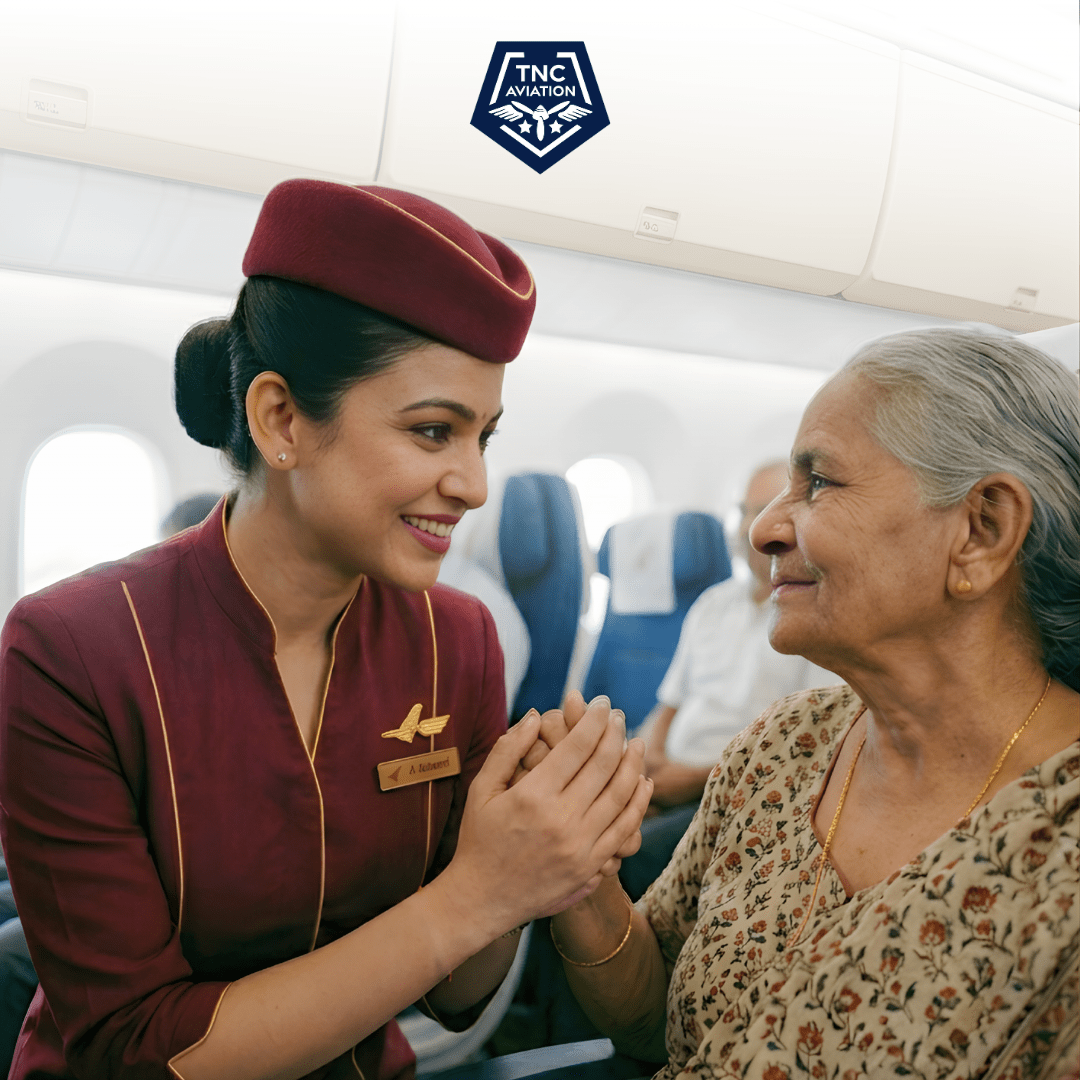
Your body language speaks as much as your words.
Key areas:
- Eye contact
- Smile and facial expressions
- Posture and gestures
What recruiters observe:
- Confidence and presence
- Positive and approachable personality
9. Improve Through Feedback
You cannot improve without understanding your mistakes.
How to improve:
- Take feedback from mentors or trainers
- Review your mock interview performance
- Continuously refine your communication style
Conclusion
Strong communication skills are essential for a successful cabin crew career. It’s not just about speaking English-it’s about being clear, confident, professional, and situation-ready.
With consistent practice and the right approach, you can significantly improve your communication and increase your chances of selection.
Why Choose TNC Aviation
If you want structured guidance to improve your communication skills and prepare for airline interviews, TNC Aviation provides:
- Practical communication training
- Personality development sessions
- Mock interviews based on real airline scenarios
- Guidance from experienced aviation professionals
At TNC Aviation, you are trained to communicate with confidence and perform effectively in real airline environments.
