

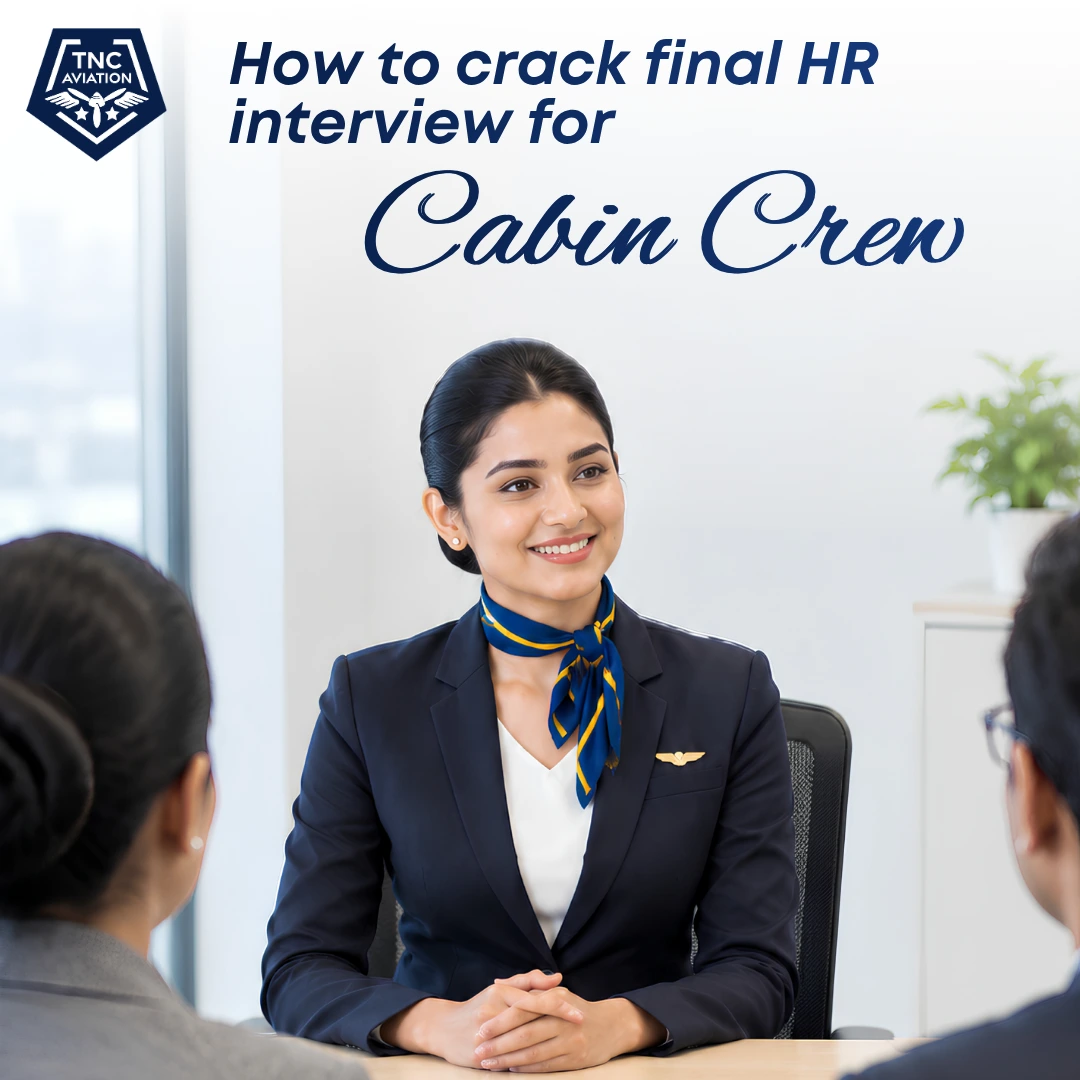
How to Crack the Final HR Round for Cabin Crew Jobs
Clearing the initial screening, group interaction, and other assessment stages is a significant achievement for a cabin crew aspirant. However, the final HR round can be equally important because it gives recruiters an opportunity to assess your overall personality, communication, attitude, and readiness for the role.
For freshers, the HR round may feel challenging because there is often no single “correct” answer. Recruiters want to understand how you think, communicate, and respond to different situations.
The key is to prepare thoroughly without sounding rehearsed.
What Does the Final HR Round Assess?
The final HR interview may focus on:
- Communication skills
- Confidence and body language
- Personality
- Customer-service mindset
- Emotional intelligence
- Adaptability
- Teamwork
- Problem-solving
- Awareness of the cabin crew role
- Professional attitude
Recruiters may also assess whether your expectations and personality are aligned with the demands of the profession.
1. Prepare a Strong Introduction
“Tell me about yourself” is one of the most common opening questions.
Your response should be:
- Brief and structured
- Relevant to the cabin crew role
- Natural and confident
- Based on genuine information
You can include your educational background, relevant experience or activities, strengths, and why you are interested in aviation.
Avoid delivering a memorised speech. A natural conversation creates a stronger impression.
2. Be Clear About Why You Want to Become Cabin Crew
Recruiters may ask:
“Why do you want to become cabin crew?”
Avoid making travel or meeting new people your only reason.
A stronger answer can demonstrate an understanding of the profession, including:
- Customer service
- Safety responsibilities
- Teamwork
- Communication
- Working in a dynamic environment
- Professional growth
Your answer should show that you understand what the role actually involves.
3. Research the Airline
Before the interview, understand the airline you are applying to.
Research:
- Airline’s background
- Destinations and operations
- Brand positioning
- Customer-service approach
- Basic information about its cabin crew role
This allows you to answer questions such as:
“Why do you want to join our airline?”
with greater confidence and relevance.
4. Prepare for Situational Questions
HR may use scenario-based questions to understand your presence of mind.
For example:
- How would you handle an angry passenger?
- What would you do if two passengers were arguing?
- How would you respond if a passenger refused to follow an instruction?
- Tell us about a time you handled pressure.
Do not focus only on giving the answer you think recruiters want to hear.
Instead, demonstrate:
Calmness + Empathy + Professional Communication + Problem-Solving
Where possible, support your responses with genuine examples from college, work, internships, sports, volunteering, or other experiences.
5. Demonstrate Emotional Intelligence
Cabin crew members interact with passengers from different backgrounds and with different expectations.
Recruiters may therefore look for signs of:
- Empathy
- Patience
- Emotional control
- Active listening
- Respectful communication
If a passenger is upset, for example, immediately becoming defensive is unlikely to be the best approach. A professional response begins with listening, understanding the concern, and then following the appropriate procedure.
6. Pay Attention to Body Language
Your response is not limited to the words you speak.
HR may observe:
- Posture
- Eye contact
- Facial expressions
- Hand movements
- Listening behaviour
- Sitting style
Sit comfortably upright, maintain appropriate eye contact, and avoid unnecessary movements.
Confidence should appear natural rather than forced.
7. Keep Your Communication Simple and Clear
You do not need complicated English to impress an interviewer.
Focus on:
- Clear pronunciation
- Appropriate vocabulary
- Complete sentences
- Moderate speaking speed
- Confident tone
Avoid excessive filler words such as “umm”, “like”, and “you know.”
If you do not understand a question, politely ask the interviewer to repeat or clarify it rather than guessing.
8. Be Honest About Your Strengths and Weaknesses
HR may ask:
“What are your strengths?”
“What is one area you are working to improve?”
Avoid giving generic answers without examples.
For strengths, explain how that strength has helped you in a real situation.
For areas of improvement, choose something genuine and explain the steps you are taking to improve it.
This demonstrates self-awareness rather than perfection.
9. Show That You Can Adapt
Cabin crew work involves changing schedules, different passengers, teamwork, and unexpected situations.
Be prepared to discuss examples that demonstrate:
- Flexibility
- Adaptability
- Working under pressure
- Adjusting to new environments
- Learning from difficult situations
Recruiters often value candidates who can remain composed when circumstances change.
10. Understand LOI and PHT
Some airlines in India may issue a Letter of Intent (LOI) after candidates successfully clear certain recruitment stages. An LOI may indicate conditional selection and does not necessarily mean final onboarding.
Certain airlines in India may also require candidates to undergo PHT (Pre-Hire Training) after receiving an LOI.
PHT (Pre-Hire Training) is a structured training phase designed to prepare candidates for airline expectations before final onboarding.
Depending on the programme, PHT may include:
- Customer service and passenger handling
- Grooming and professional presentation
- Body language and confidence building
- Voice modulation and articulation
- Communication practice
- Scenario-based preparation
Through rigorous PHT (Pre-Hire Training), candidates can strengthen their communication, confidence, professional presentation, and presence of mind, which can significantly improve their chances of converting their LOI into final selection.
11. Understand That Assessment Continues Beyond Your Answers
Recruiters may form an impression based on your overall behaviour.
They may observe:
- How you greet people
- How you interact with other candidates
- How you respond to staff
- Whether you listen carefully
- How you handle pressure
- Your overall professionalism
Therefore, maintain the same level of professionalism throughout the recruitment process.
Common Mistakes in the Final HR Round
Avoid:
- Memorising complete answers
- Giving fake or exaggerated examples
- Speaking negatively about previous experiences
- Being overly casual
- Interrupting the interviewer
- Giving one-word answers
- Using excessive filler words
- Showing poor body language
- Focusing only on salary or travel benefits
- Assuming an LOI automatically guarantees final employment
- Not taking PHT (Pre-Hire Training) seriously when applicable
Final HR Interview Checklist
Before your interview, make sure you have:
- Researched the airline
- Prepared your introduction
- Understood the cabin crew role
- Practised situational questions
- Prepared genuine examples
- Worked on communication and body language
- Reviewed current affairs
- Planned professional attire and grooming
- Prepared all required documents
- Understood the recruitment process beyond the interview
Conclusion
The final HR round is an opportunity to demonstrate that you are more than a well-groomed candidate. Recruiters want to see communication skills, emotional intelligence, adaptability, confidence, professionalism, and a genuine understanding of the cabin crew role.
Rather than memorising perfect answers, focus on developing the skills that allow you to communicate naturally and respond thoughtfully.
Understanding what comes after the HR round is equally important. Depending on the airline, candidates may progress through LOI, PHT (Pre-Hire Training), final evaluation, medical requirements, and onboarding before their selection is complete.
Why Choose TNC Aviation?
TNC Aviation helps aspiring cabin crew candidates prepare for recruitment through:
- Structured PHT (Pre-Hire Training), where applicable
- Personality development and grooming sessions
- Communication and confidence-building
- HR interview and scenario-based preparation
- Guidance from experienced aviation professionals
At TNC Aviation, candidates are guided to develop the confidence, communication skills, professional presentation, and presence of mind needed to approach the final stages of cabin crew recruitment more effectively.
